
Behind the Scenes: How a Professional Video Shoot Works from Start to Finish
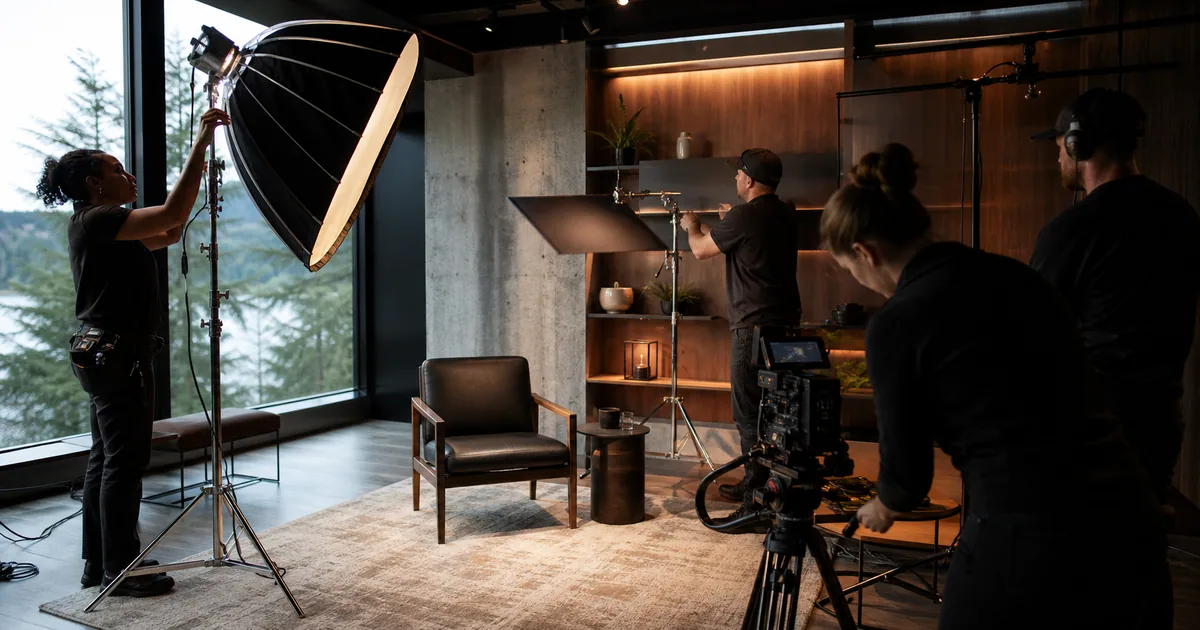
Have you ever wondered what actually happens during a professional video production? If you’ve never been through the process, it can seem mysterious — or even a little intimidating. But understanding how a shoot works demystifies the experience and helps you get the most out of your investment.
Here’s a look at what happens behind the scenes, from the first conversation to the final cut.
Phase 1: Discovery and Pre-Production
Every great video starts with a conversation. During the discovery phase, your production team learns about your business, your goals, your audience, and your vision for the project. This isn’t a one-sided interview — it’s a collaborative discussion where your insights about your business meet the team’s expertise in visual storytelling.
From there, the team develops a creative brief, which includes the concept, tone, key messages, and visual style. This becomes the blueprint for everything that follows. You’ll also see a script or shot list that maps out every scene, along with a production timeline and logistics plan.
Pre-production might seem like a lot of planning for a single shoot day, but it’s where the magic really starts. A well-planned shoot runs smoothly, finishes on time, and delivers stronger results than one where the team is figuring things out on the fly.
Phase 2: The Shoot Day
Shoot day is where months of preparation come to life. Here’s what a typical production day looks like.
The crew arrives early — often one to two hours before the first shot — to set up equipment. This includes cameras, lighting rigs, audio gear, and any specialty equipment like sliders, gimbals, or drones. Setup time varies based on location and complexity, but expect it to take 30 minutes to an hour.
Once everything is set, there’s a walkthrough with you and your team. The director runs through the shot list, explains what each scene will look like, and answers any questions. If there are on-camera talent or employees involved, this is when they get comfortable with the process.
Then filming begins. Each scene is typically shot multiple times from different angles to give the editor plenty of material to work with. The director manages pacing and performance, the cinematographer focuses on framing and camera movement, and the audio technician monitors sound quality.
Your role during the shoot is to be available for questions and feedback. You don’t need to direct — that’s what your production team is for. But your presence ensures that the content authentically represents your brand.
Phase 3: Post-Production
This is where raw footage transforms into a polished final product. Post-production involves several distinct steps.
The editor reviews all footage and selects the best takes and angles. These clips are assembled into a rough cut — a first-draft edit that establishes the structure and flow of the video. Once the rough cut is approved, the editor refines the pacing, adds transitions, and tightens the storytelling.
Color grading comes next, giving the video its final look and feel. This is what creates that cinematic quality — matching colors across shots, enhancing contrast, and establishing a visual mood that supports your brand aesthetic.
Sound design rounds out the experience. This includes mixing dialogue and ambient sound, adding music that complements the tone, and ensuring audio levels are balanced throughout. If voice-over narration is part of the project, it’s recorded and layered in during this phase.
Finally, motion graphics — titles, lower thirds, logos, and call-to-action text — are added as needed.
Phase 4: Review and Revisions
You’ll receive the first draft of your video for review. This is your chance to provide feedback on everything from the overall flow to specific moments you’d like adjusted. Most professional teams include two to three rounds of revisions in their project scope.
The best feedback is specific. Instead of "something feels off in the middle," try "the transition at the 45-second mark feels abrupt" or "can we swap the music in the opening to something with more energy?" Specific notes lead to faster, more effective revisions.
Phase 5: Final Delivery
Once revisions are complete and you’ve approved the final cut, your video is exported in formats optimized for every platform where you plan to use it. This typically includes a high-resolution master file, web-optimized versions for your website, and platform-specific formats for social media channels.
Your production team should also provide guidance on how to distribute the video for maximum impact — including recommendations for posting schedules, platform strategies, and ways to repurpose the content across different channels.
The Whole Process, Start to Finish
From initial discovery to final delivery, a typical video project takes three to six weeks. The shoot itself is often just one day, with the majority of time invested in thoughtful planning and meticulous post-production.
Understanding this process helps you appreciate the craftsmanship that goes into professional video — and helps you be a better collaborator throughout the journey.
Curious about what a shoot day looks like for your specific project? Reach out to Wildwood Digital Media and we’ll walk you through exactly what to expect.